Ask whether a poly tank can hold hydrochloric acid and the short answer is yes. The longer answer is that on most HCl sites the tank is not where the trouble starts. It starts at the vent, at the fittings, and in the steel and wiring a few feet away.
What the resistance chart shows
Our chemical resistance chart rates materials A (excellent), B (good) or C (not suggested). Here is how hydrochloric acid reads across it:
- Polyethylene (PE): A at 70°F and A at 140°F.
- Crosslinked polyethylene (XLPE): A at 70°F and A at 140°F.
- PVC and CPVC: A.
- EPDM and Viton: A.
- 316 stainless steel: C.
- Titanium: B. Hastelloy C: A.
So the plastic is not the weak point. The metal is. More on that below.
The acid gives off gas
Commercial hydrochloric acid, often sold as muriatic acid at around 31 to 32 percent, is hydrogen chloride gas dissolved in water. Some of that gas comes back out of the liquid, and it comes out faster as the acid gets stronger and warmer. A tank breathes every time it is filled or drawn down, and what it breathes out through the vent carries HCl fumes.
Those fumes meet moisture in the air and turn back into acid on whatever they land on. That is why the tell on an HCl site is usually rust: a handrail by the vent, a pipe rack, a conduit, a light fixture, the electrical panel on the nearest wall.
Where the vent goes matters
On a small tank, the answer may be as simple as venting away from equipment and people. On a bulk tank filled from a truck, a lot of air leaves in a short time. Bulk HCl tanks commonly route the vent to a fume scrubber, often a simple vessel where the vented air bubbles through water or a dilute caustic so the gas is captured before it reaches the air.
Size the vent for the fill rate first. A truck unloading with air pressure pushes air through the tank quickly, and an undersized vent can pressurize the tank. Then decide where that air goes.
Fittings are where steel sneaks in
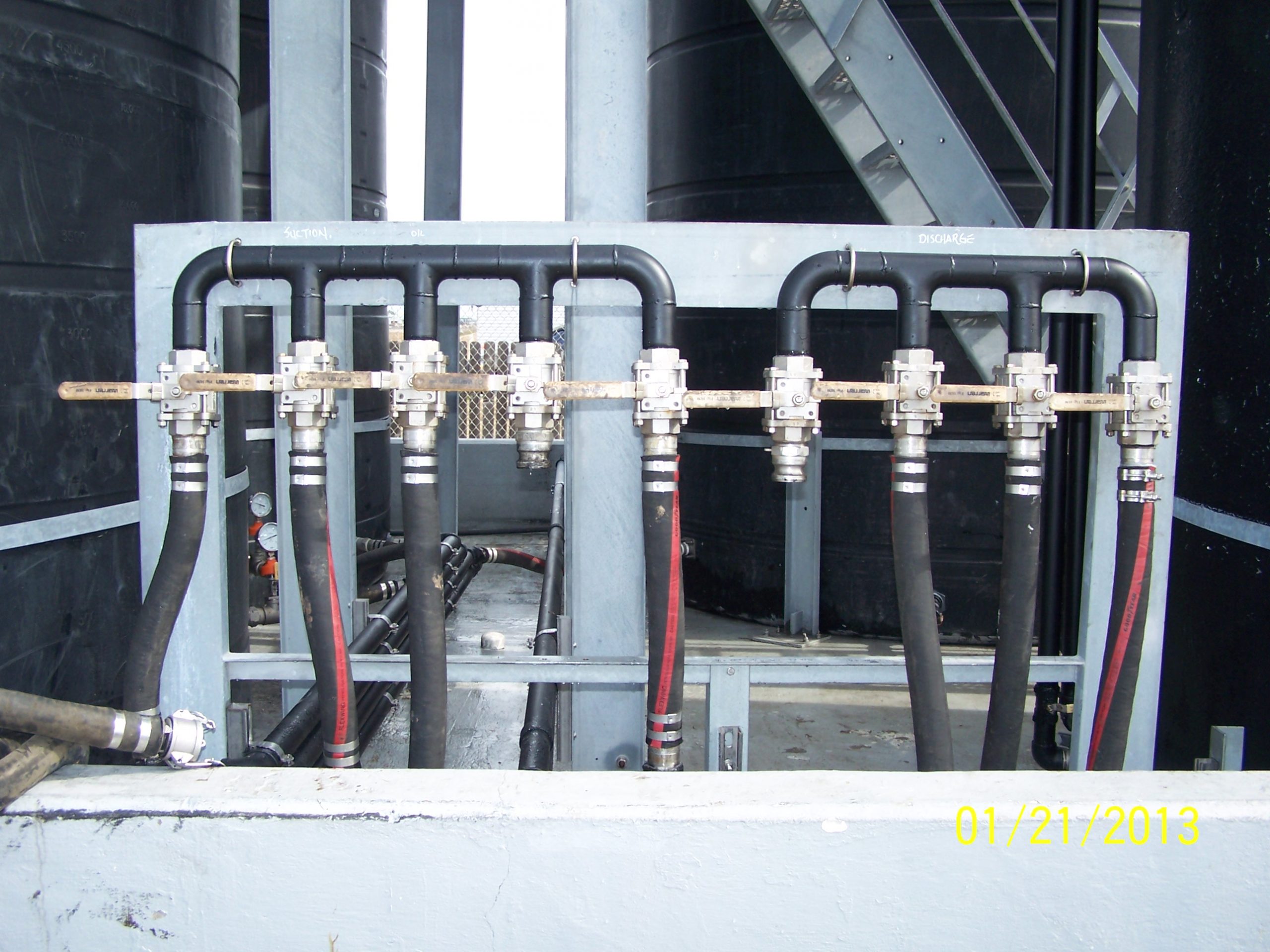
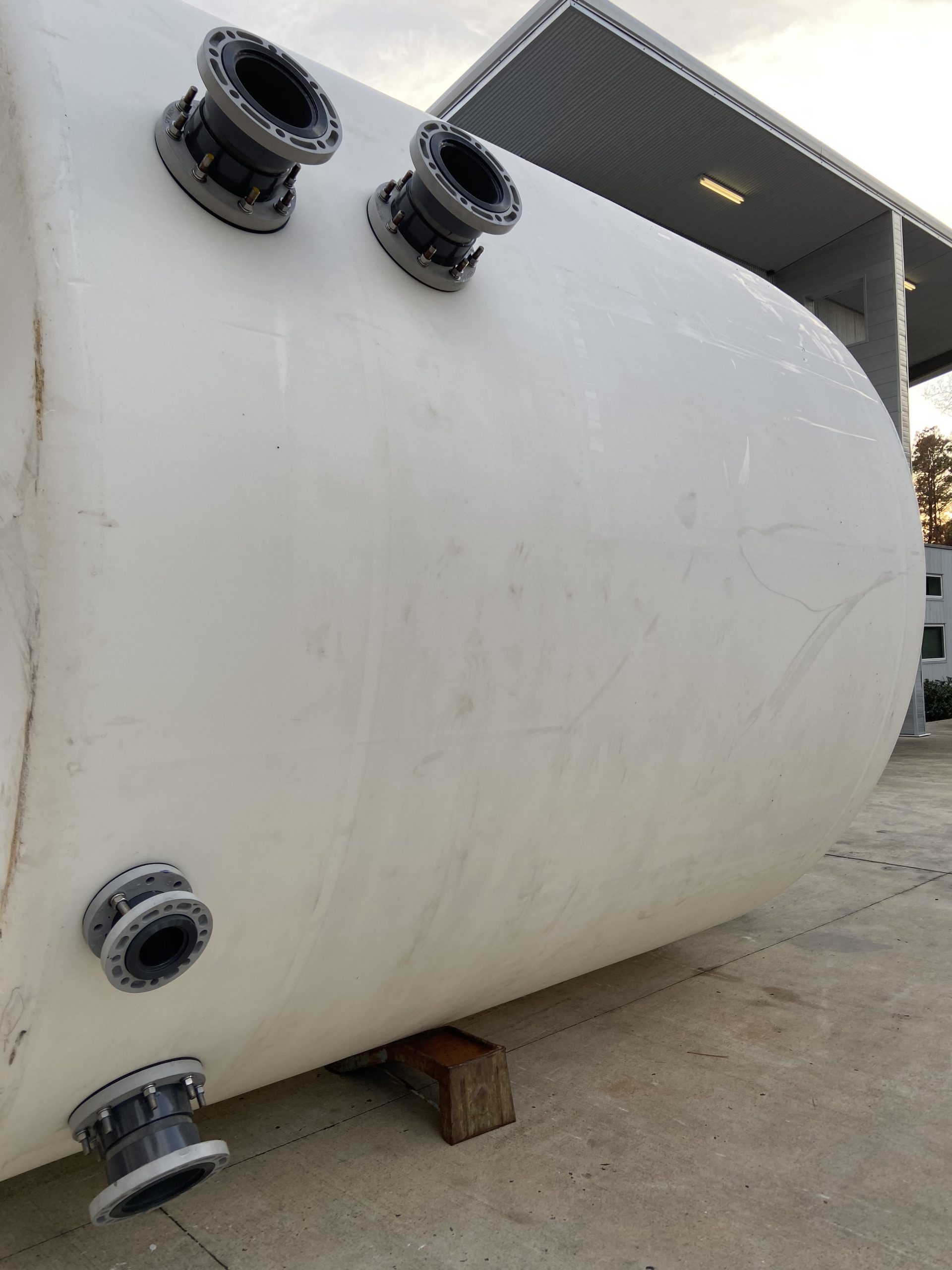
A tank rated A for hydrochloric acid can still fail at a fitting. Stainless steel is rated C for this service on our chart, and chlorides are known for pitting it. Bolts, bulkhead fittings, valve bodies and level-gauge parts are the usual places stainless ends up by habit.
The materials the chart rates A for HCl include PVC, CPVC, EPDM and Viton. Say the chemical out loud when you order fittings and gaskets, so nobody fills in the blank with a stock part.
Weight and size
Hydrochloric acid at 31 to 37 percent runs roughly 1.16 to 1.19 specific gravity, so it is heavier than water but well short of sulfuric acid. A tank rated for 1.5 has room to spare. Our specific gravity article covers what the rating means.
Size is where the material choice can change. Our material guide points larger, long-term bulk HCl storage toward fiberglass (FRP) with a vinyl ester corrosion barrier, and poly toward smaller tanks and day tanks. Both hold the acid. The choice comes down to size, how long the tank needs to last, and how the site is laid out.
Containment and placement
Hydrochloric acid is a corrosive, so containment, distance from incompatible chemicals, and labeling usually come from the fire code your city or county has adopted, your permit, or your insurer. Keep it away from bleach and other oxidizers, and away from caustic tanks unless the containment is designed for both. Our secondary containment article walks through how much a dike has to hold.
What to bring to a quote
- The concentration, and whether it is technical grade or a higher purity.
- Fill method and rate: truck, tote, or drum.
- Indoors or outdoors, and what equipment sits near the vent.
- Whether a scrubber is planned or already on site.
- The containment your site or permit calls for.
With those answers we can tell you whether poly, XLPE or fiberglass is the right tank, and which fittings and gaskets go on it.
Have a project on the board?
Tell us the chemistry, capacity, and ship-to ZIP — we'll have a real quote back the same business day.