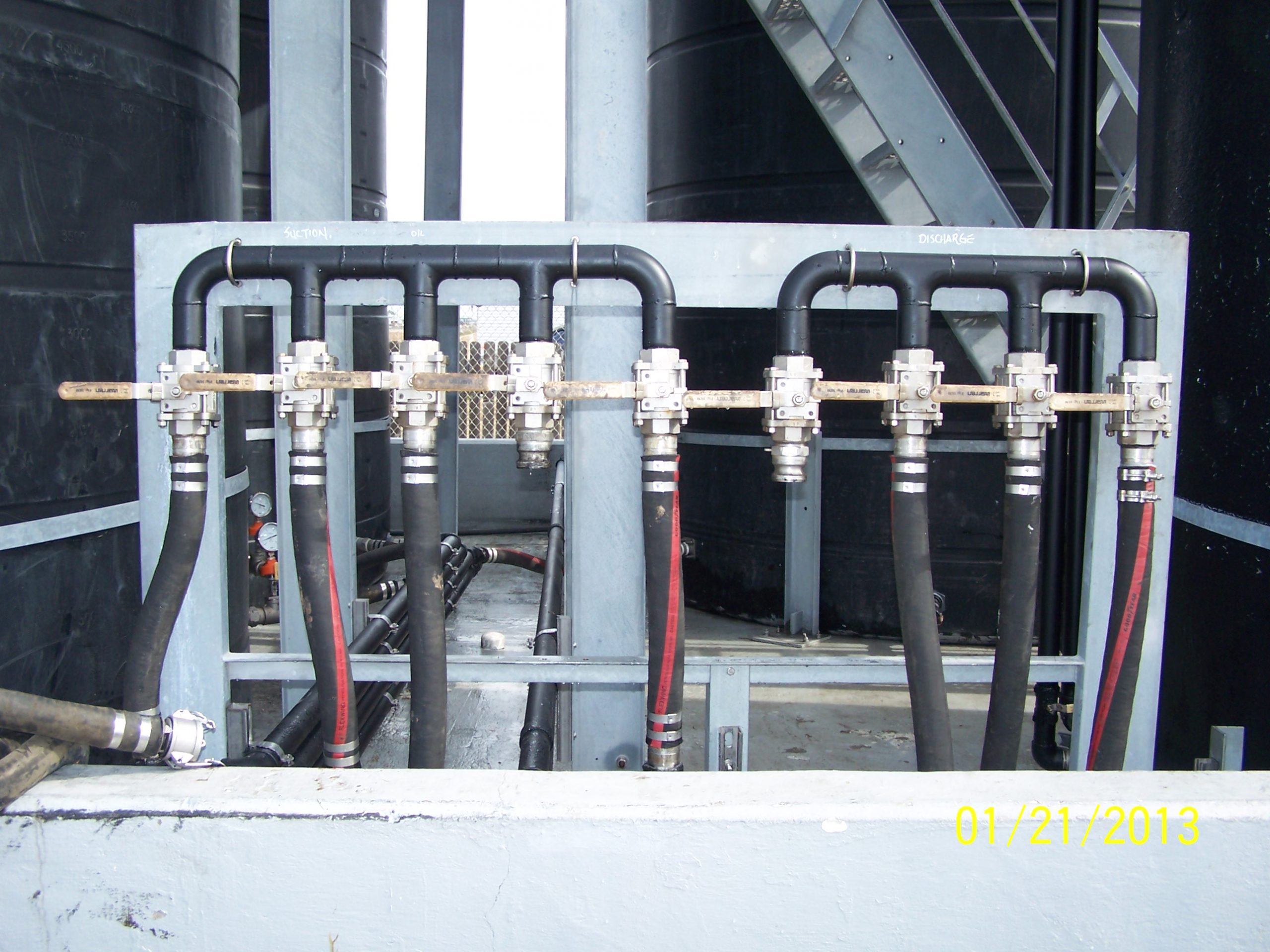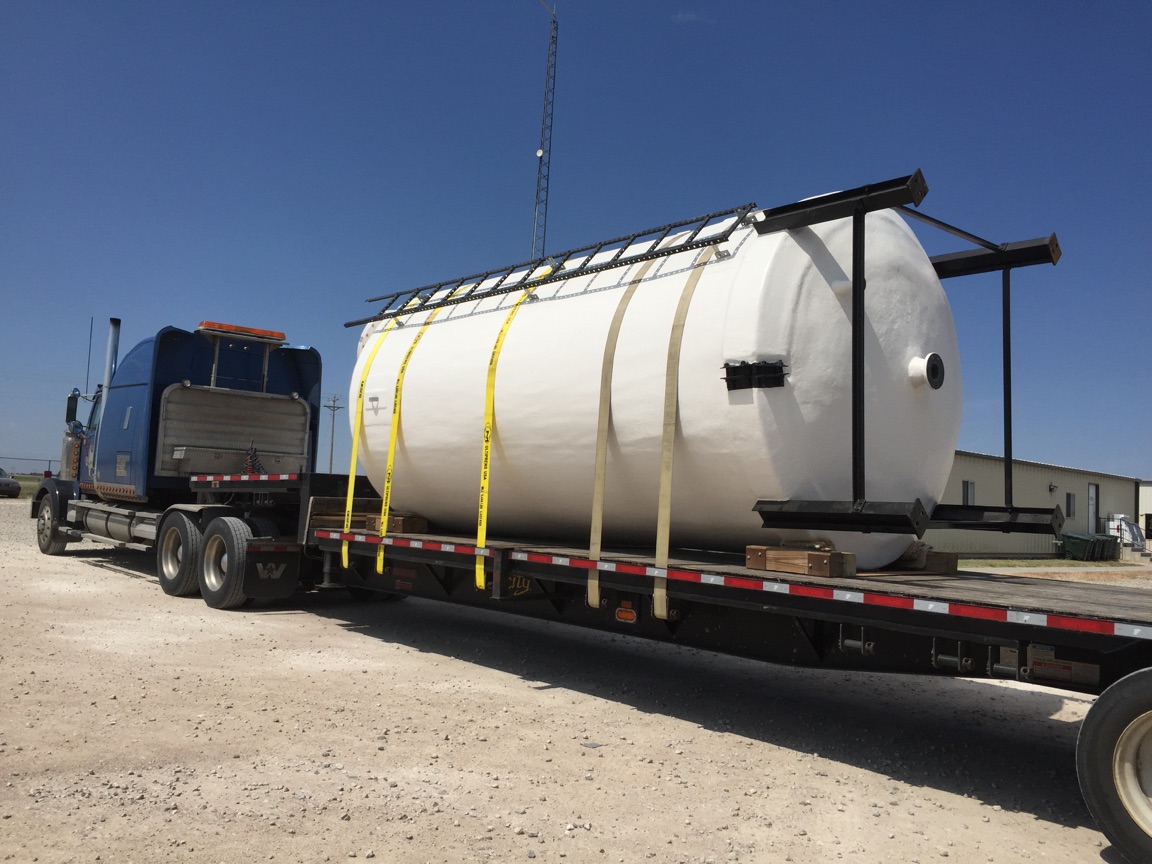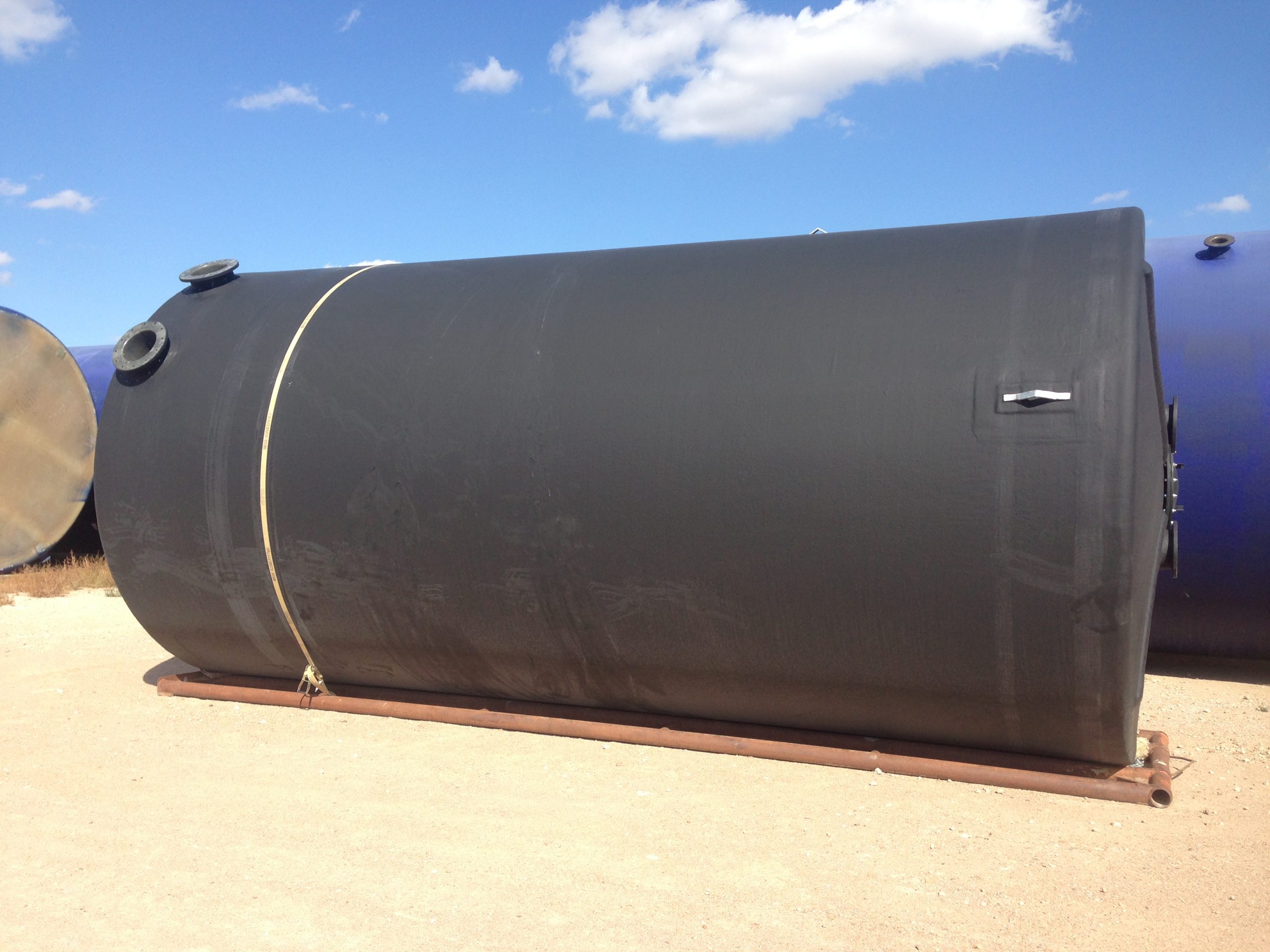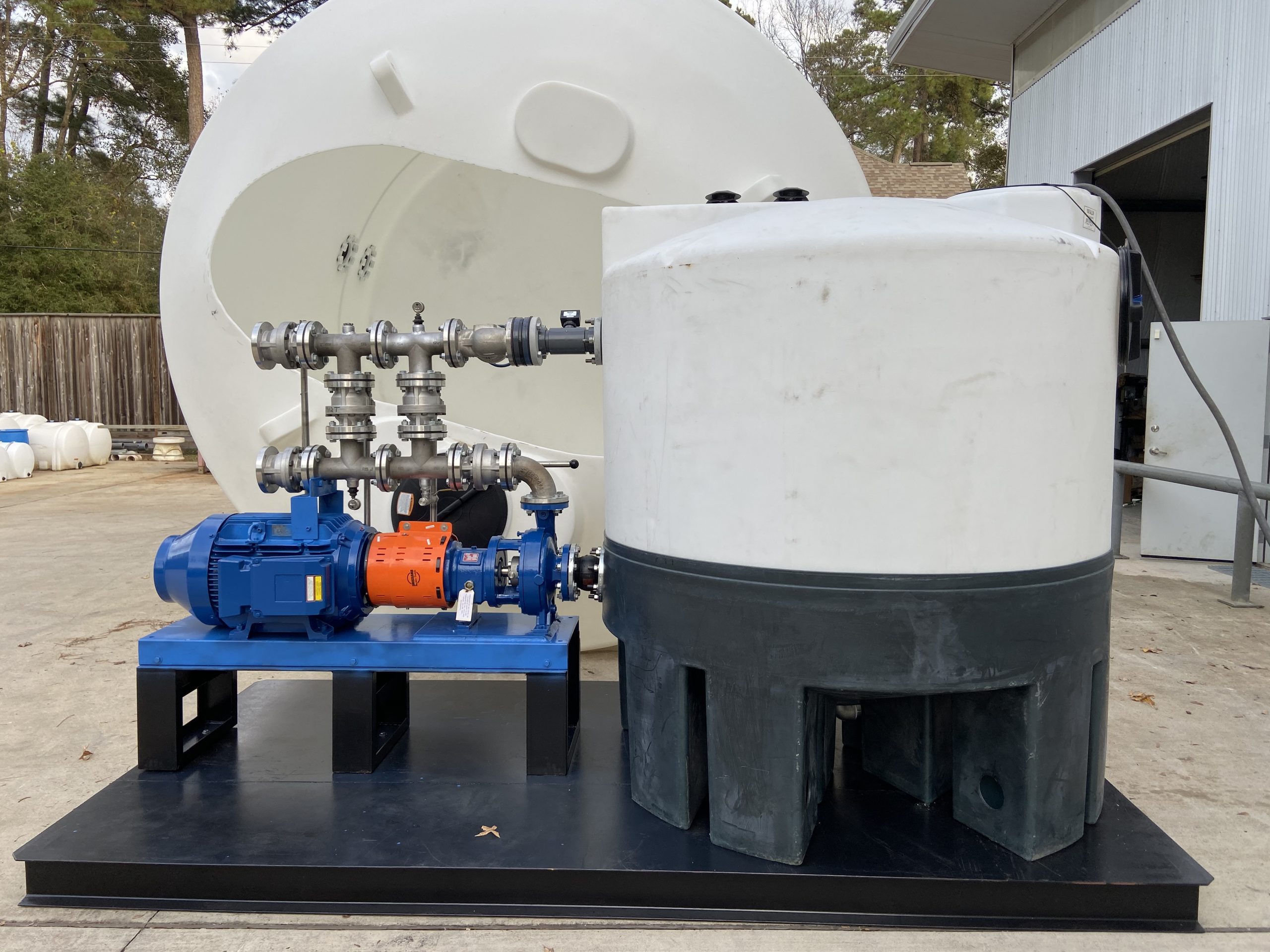
When customers call us for a chemical storage tank, the first conversation isn't price — it's chemistry. The chemical you're storing, its concentration, and the temperature it sees in service drive almost every other choice. Below is the framework we use to triage between polyethylene, fiberglass, and steel, with the trade-offs you need to think about up front.
The three families
Polyethylene (HDPE and XLPE). Rotationally molded, one-piece, seamless. Excellent chemical resistance to most acids, caustics, salts, and water. Service temperature continuous to roughly 120°F (HDPE) or 140°F (XLPE). Atmospheric pressure only. Capacity from 5 gallons to about 50,000 gallons. Typically the lowest installed cost in its envelope.
Fiberglass-reinforced plastic (FRP). Glass fiber laid up in a thermoset resin matrix (vinyl ester, isophthalic polyester, or specialty resins) with a chemical-resistant inner liner. Much higher temperature ratings than PE — many resin systems handle 180°F continuous, some specialty systems higher. Wider chemical envelope, including some hot acid and oxidizer service that PE can't touch. Capacity to a million gallons in field-laid configurations.
Steel (carbon and stainless). Welded or bolted construction. Required for pressure and vacuum service, hot service above polymer ratings, and most NFPA 22 above-ground fire-protection storage. Compatibility depends entirely on alloy choice and lining: carbon steel for petroleum and inert duties, 304 stainless for water and many food applications, 316L for chloride and food/pharma, specialty alloys (Hastelloy, titanium) for severe service.
How chemistry drives the choice
A short list of the most common chemical services and the right material:
- Potable water (NSF 61). Polyethylene first. NSF-listed HDPE for tanks under 50,000 gallons. Welded stainless or coated bolted steel for larger municipal duty.
- Sodium hypochlorite (bleach, 12.5%). XLPE polyethylene. Standard HDPE will yellow and embrittle in months; FRP requires the right liner and is overkill below ~10,000 gallons.
- Sulfuric acid (93–98%). Carbon steel for storage at ambient temperature (passivates the inner surface). FRP with an appropriate liner for dilute acid (below ~70%). Avoid PE for concentrated H₂SO₄ at temperature.
- Hydrochloric acid (32%). FRP with a vinyl ester resin and corrosion barrier. PE works for cold-storage day tanks but is not the long-term answer at scale.
- Sodium hydroxide (50% caustic). Polyethylene works well for room-temperature storage. Carbon steel is the standard for hot caustic service (above 150°F).
- Hydrofluoric acid (49%). Polyethylene only — HF eats glass, so FRP is out, and most metals corrode rapidly in dilute HF.
- Ferric chloride. XLPE for storage; FRP at scale. Standard HDPE will degrade.
- Hydrogen peroxide (35–50%). XLPE day tanks; aluminum or 304/316L stainless for bulk storage. Avoid steel with copper or iron contamination — peroxide decomposes catalytically.
- Process water and condensate at elevated temperature. FRP if continuous duty above 120°F. Stainless for higher temperature or pressure service.
This is a starting point, not a substitute for a real chemical compatibility review. Concentrations, trace contaminants, temperature swings, and exposure duration all change the answer. Tank Systems will pull manufacturer compatibility data and apply field-experience corrections before quoting.
Capacity and physical constraints
| Capacity range | First choice | Second choice |
|---|---|---|
| Under 1,000 gal | Polyethylene | Stainless (food/pharma) |
| 1,000 – 15,000 gal | Polyethylene | FRP (hot service) |
| 15,000 – 50,000 gal | Polyethylene or FRP | Bolted steel |
| 50,000 – 500,000 gal | FRP or bolted steel | Welded steel |
| Above 500,000 gal | Welded or bolted steel | Field-erected FRP |
Above 14 feet in diameter, polyethylene rotomolding hits a practical ceiling. From there, the conversation is FRP or steel.
Pressure, vacuum, and temperature
Polyethylene tanks are atmospheric vessels. They don't hold pressure beyond a few inches of water column, and they don't hold vacuum at all without engineered protection. If your process pulls vacuum on the tank — even briefly during pump-down — you need a vacuum relief valve, or you need a stiffer construction (FRP or steel).
Continuous temperature ratings:
- HDPE: about 100°F continuous, 120°F maximum
- XLPE: about 120°F continuous, 140°F maximum
- FRP (vinyl ester, standard): about 180°F continuous, with some specialty systems to 220°F+
- Carbon steel: limited by gasket and lining temperature, not the steel itself
- Stainless: limited only by gasket selection in most service
If your service runs hot all the time, plastic is probably the wrong answer regardless of chemistry.
Installed cost vs. life-cycle cost
Polyethylene wins on installed cost in its envelope by a wide margin. A 10,000-gallon vertical HDPE tank delivered, set on a slab, and piped is typically a fraction of the equivalent FRP or stainless tank. For chemical service that fits inside the PE envelope, that math is hard to argue with — and the 20-to-30-year service life means total cost of ownership stays favorable.
FRP wins on life-cycle cost when the service is hot or large. A correctly specified FRP tank in 180°F process water service will outlast a stainless tank that's been thermal-cycled in the same duty.
Steel wins on life-cycle cost wherever code or pressure forces the choice — no other material is even an option for NFPA 22 above-ground fire-water storage at scale.
Common mistakes that force expensive replacements
- Specifying tank material based on the supplier's stock list, not the chemistry. "We have HDPE on the floor; we'll use that" is how you end up with a yellow, brittle bleach tank in 18 months.
- Ignoring the temperature swing during use. Day tanks for chemicals that are heated for dosing routinely exceed the resin's continuous rating during the heating cycle. The tank rated for the average condition fails because the peak condition is 30°F higher.
- Treating fittings as an afterthought. Bulkhead fitting selection, gasket material, and torque procedure determine more failures than the tank itself does. EPDM is fine for water and caustic; for sulfuric, ferric, or peroxide, you need Viton or specialty elastomers.
- Buying the cheapest steel tank and assuming the lining will save it. Linings are sacrificial layers — they extend life, they don't grant immunity. If your lining isn't on a maintenance schedule, you're operating on borrowed time.
Bottom line
For most chemical storage under 50,000 gallons at near-ambient temperature, polyethylene is the right answer and it's not close. For hot service, large capacities, or duties outside the polymer envelope, fiberglass or steel takes over — and the right choice between those two is driven by the chemistry, the temperature, and the code requirements.
Tell us what you're storing, what concentration, what temperature range, and what capacity. We'll tell you which of the three families is right and quote it both ways if it's a close call.
Have a project on the board?
Tell us the chemistry, capacity, and ship-to ZIP — we'll have a real quote back the same business day.