A full tank is heavy and it stays where you put it. The tank that moves in a storm is the empty one, because it has the same sail area and almost none of the weight.
That catches operators out every season. The big full tanks get secured and inspected. The empty spare stands loose beside the building. The empty one is the projectile.
Anchoring done right
Polyethylene tanks built for outdoor service are molded with tie-down lugs at the base. Those lugs exist to be used.
- Anchor to a proper pad. Soil and gravel are not anchorage.
- Size hardware from the anchor design, not from what fits the hole.
- Do not over-torque. A lug crushed by an overtightened bolt becomes a stress riser, and that is where it cracks.
- Straps over the shell supplement an anchor pattern. They do not replace one, and they must not deform the tank.
Wind design follows the loads in the building code your jurisdiction has adopted, and coastal Texas carries some of the higher design speeds in the country. An engineered anchor pattern costs very little next to a replacement tank.
Before a storm
- Ballast the empties. Even a partial fill of water adds real weight. Use water rather than product unless the tank is dedicated to that chemical.
- Check anchor bolts and lugs. Look for elongated holes and corrosion where the lug meets the pad.
- Verify vents are clear and screens are intact.
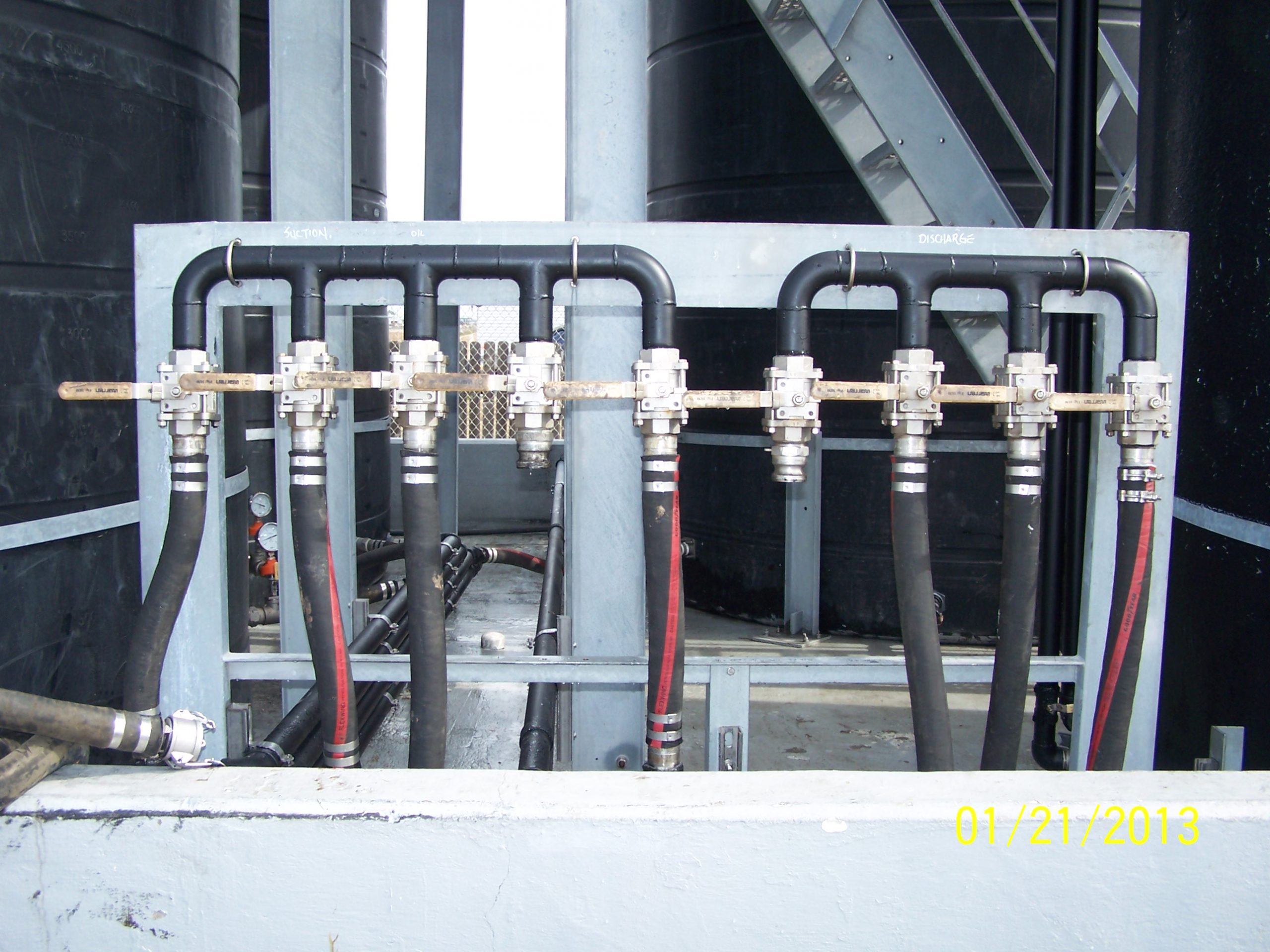
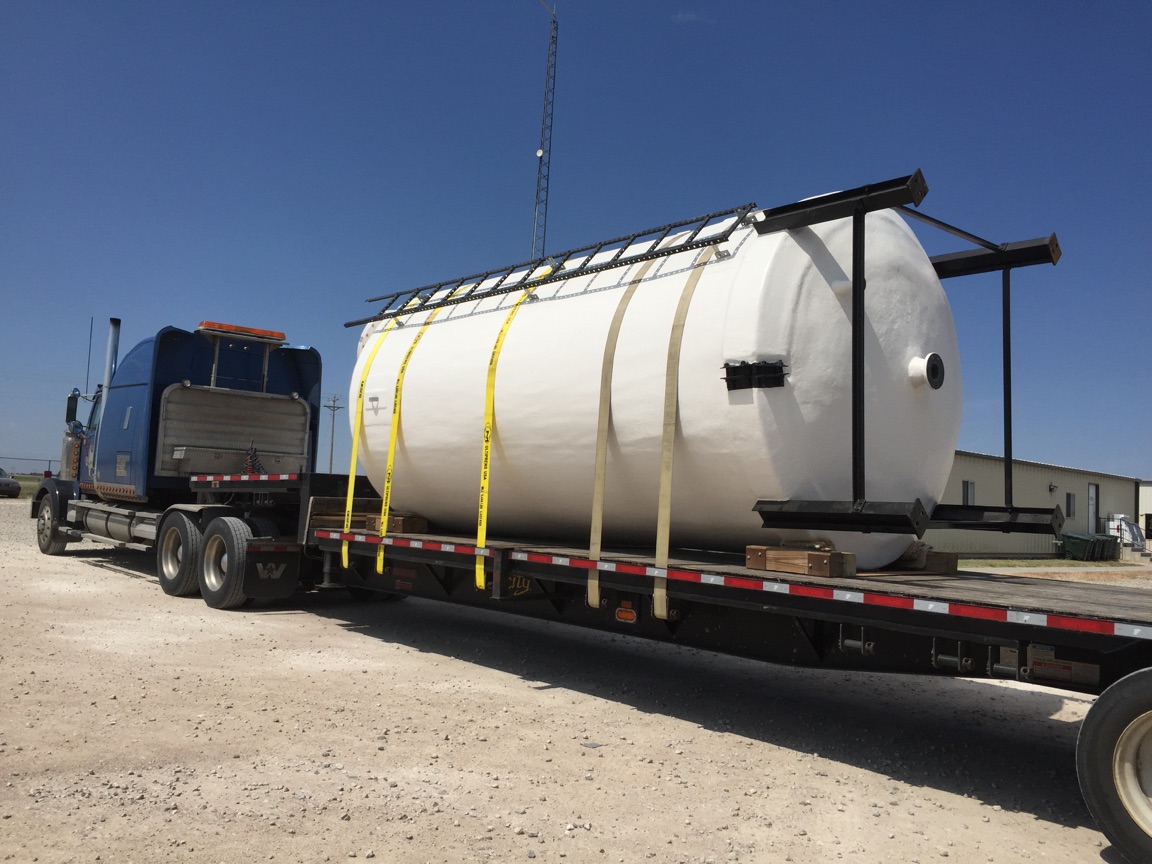
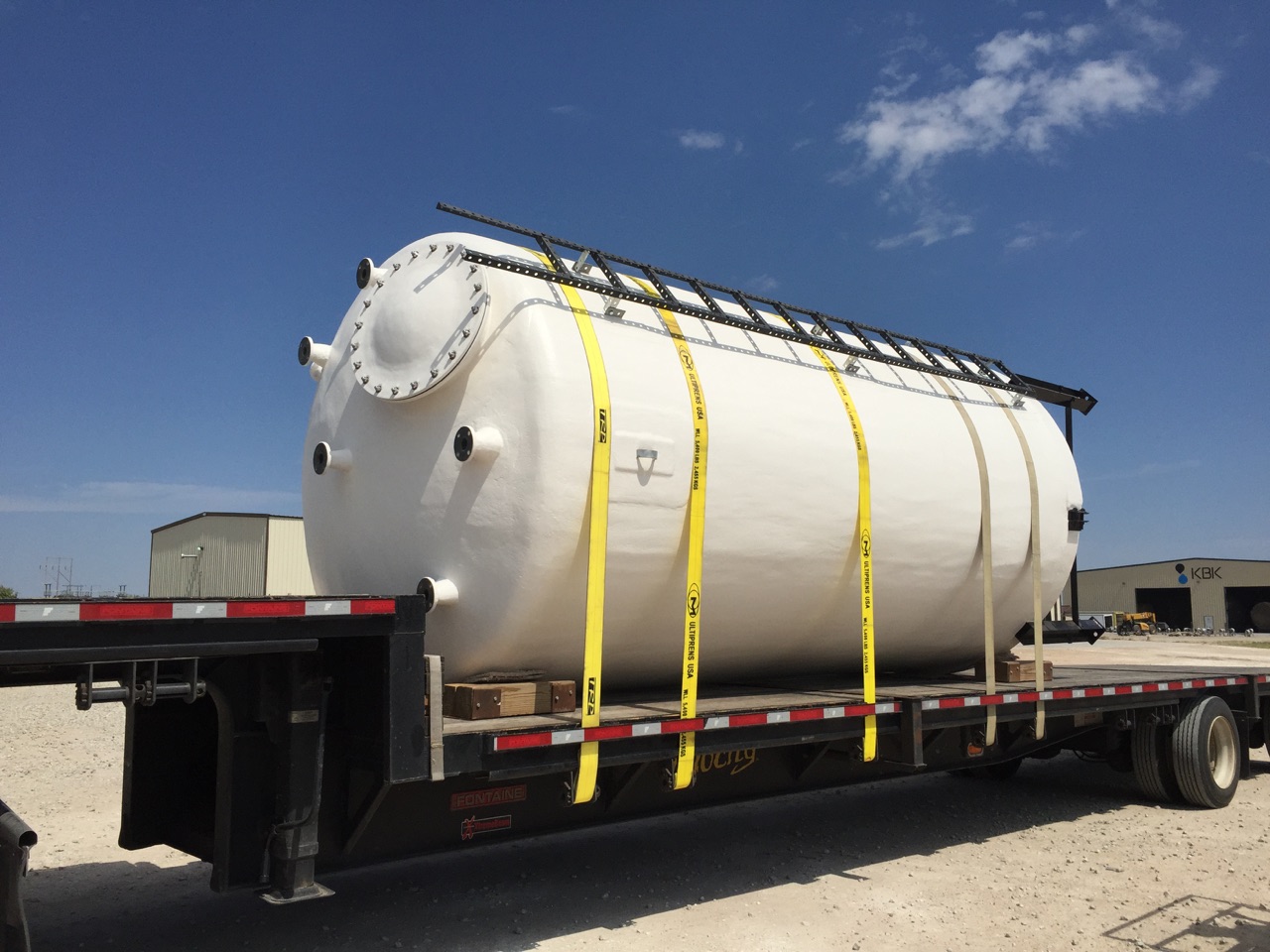
- Secure or remove loose accessories. Ladders, level gauges and unsupported piping all become debris.
- Photograph the installation. It makes the insurance conversation afterward much shorter.
After
Walk the tank before it goes back in service. Look for shifted position, elongated lug holes, piping that is now in tension because the tank moved half an inch, and stress whitening at the base. Whitening on polyethylene is a genuine warning sign, not a cosmetic one.
Bottom line
Anchor the tank properly at installation and your storm plan becomes a checklist instead of a scramble. Ballast the empties, check the lugs, clear the vents. Most storm damage we get called about was preventable with an hour of work on a calm day.
Have a project on the board?
Tell us the chemistry, capacity, and ship-to ZIP — we'll have a real quote back the same business day.